The Telecom Regulatory Authority of India (TRAI) has published the outcome of a comprehensive mobile network evaluation carried out across the Mumbai Licensed Service Area last September. Directed by the regulator’s Bengaluru branch, the assessment examined real-world performance metrics for voice calls and data transfer speeds among major operators.
Audit Methodology and Scope
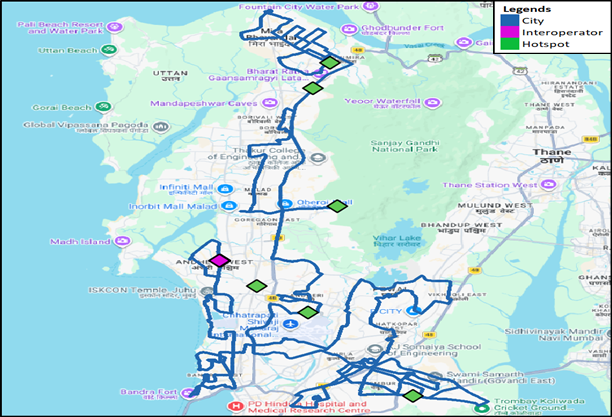
Between September 23 and 25, independent teams traversed a 212.6-kilometer urban circuit alongside seven critical transit and commercial hubs—including the Chhatrapati Shivaji Maharaj International Airport Terminal 2 and Andheri Railway Station. Technicians utilized automated testing gear across 2G, 3G, 4G, and 5G spectrums to evaluate signal retention, connection stability, and throughput performance under active conditions.
Mumbai District Performance Breakdown
The evaluation highlights distinct performance tiers among local service providers:
- Signal Availability: Out of tens of thousands of samples logged in auto-selection mode, Airtel, Reliance Jio, and Vi recorded zero instances of signal strength dipping below baseline thresholds. Conversely, MTNL registered significant coverage deficiencies during testing.
- Voice Reliability: Call drop rates remained minimal for private operators. Out of over 500 connected attempts, Vi reported zero dropped calls, Airtel and Jio each logged two drops, while MTNL encountered two failures out of 32 attempted calls.
- Throughput Speeds: Reliance Jio recorded the highest average download velocity at 248.93 Mbps, followed by Airtel at 133.86 Mbps and Vi at 89.04 Mbps. MTNL registered negligible data throughput during the assessment window. Upload speeds followed a similar pattern, led by Jio at 33.87 Mbps and Airtel at 32.80 Mbps.
The complete evaluation findings have been transmitted to the respective telecom providers for remedial optimization, and the full dataset remains accessible via the official TRAI portal.
According to an official statement issued by PIB Delhi on November 5, 2026.