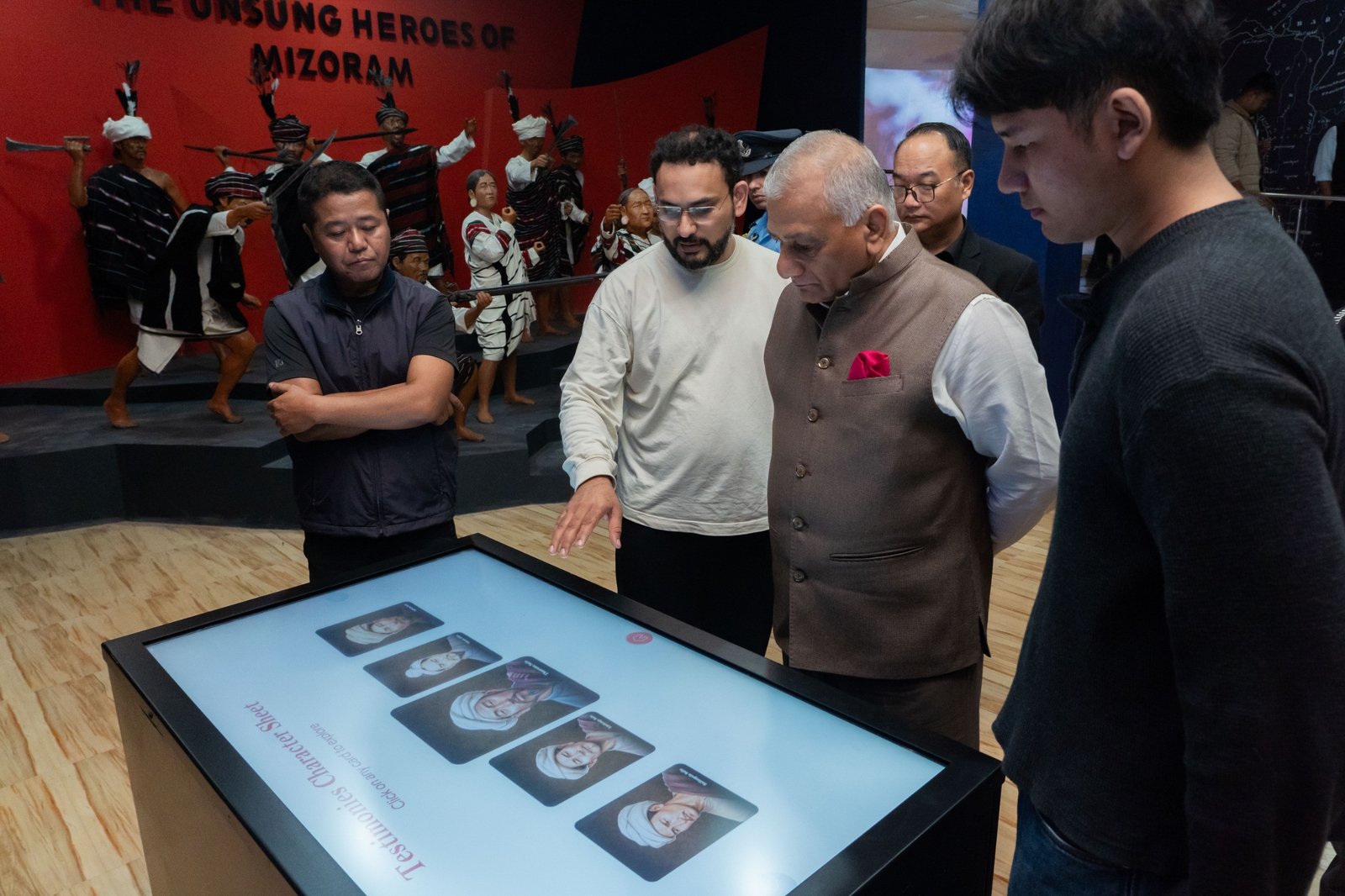
Mizoram Governor General Vijay Kumar Singh (Retd) conducted a final walkthrough of the newly constructed Ropuiliani Tribal Freedom Fighters Museum near Aizawl on Tuesday, preparing the site for its official virtual inauguration by Prime Minister Narendra Modi on November 15.
Situated in Kelsih, the multi-facility cultural site was funded through the Ministry of Tribal Affairs to preserve the legacy of Mizo resistance figures who opposed British imperialism. During his inspection of the grounds, Governor Singh directed project managers to incorporate regional materials and traditional Mizo aesthetics to enhance the site’s authentic cultural footprint, emphasizing its potential as a national educational hub. The venue encompasses a central museum facility, a Birsa Munda Tribal Pride Garden, an open-air amphitheater, traditional architectural huts, heritage walking trails, visitor amenities, and administrative housing.
The institution honors Chieftainess Ropuiliani, a central 19th-century figure in Mizo anti-colonial resistance. Following the death of her husband, Chief Vandula, she assumed leadership over the Denlung region in the Lushai Hills. She became a prominent focal point of regional defiance by rejecting British territorial expansion, refusing taxation demands, and organizing opposition to forced labor. British colonial forces captured Ropuiliani and her son, Lalthuama, in 1893, transferring her to Rangamati prison in the Chittagong Hill Tracts, where she remained incarcerated until her death in January 1895.
Why This Matters: Reclaiming Indigenous Narratives in National History
The establishment of the Kelsih museum reflects a broader institutional movement to integrate indigenous and frontier anti-colonial narratives into national historical memory. Historically, mainstream accounts of 19th-century resistance focused primarily on urban centers or central Indian uprisings, often marginalizing tribal and northeastern figures. By highlighting leaders like Chieftainess Ropuiliani—who combined indigenous sovereign defense with gendered political leadership—the project underscores the diverse geographical scope of anti-imperial movements. Furthermore, developing state-of-the-art heritage infrastructure in the Northeast supports cultural preservation, fosters localized heritage tourism, and strengthens national historical connectivity across geographically distant regions.
Sources: Akashvani News Aizawl, Lok Bhavan Mizoram Official Communications