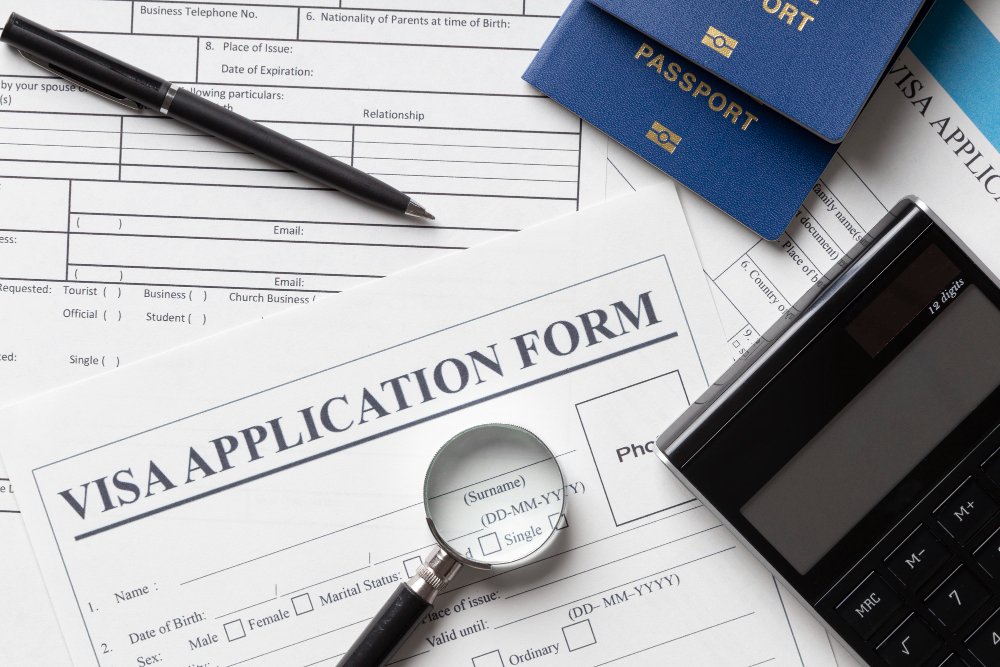
The Indian government has restructured its visa regulatory system, consolidating visa categories and cutting application form requirements to simplify international travel, academic admissions, and cross-border commercial activity.
According to a announcement from the Ministry of Home Affairs, the total number of primary visa classifications has been reduced from 13 to nine, while sub-categories have been streamlined from 49 to 23. This overhaul follows an earlier phase of administrative streamlining executed in October 2025.
Alongside category consolidation, federal authorities reduced the required data fields across all 23 sub-category application forms by 65% to 70% in an effort to accelerate processing timelines and lower administrative burdens.
Revised Visa Structures Across Key Sectors
The restructured framework establishes updated parameters across several high-volume entry classifications:
- Visitor Visa (Replacing Tourist Visa): Divided into two primary tiers. The V-1 Visa offers a 30-day, multiple-entry allowance for short-term tourism, brief business consultations, wellness trips, or short cultural studies. The V-2 Visa provides longer-term validity options of one, five, or 10 years for repeat visitors, as well as a specific six-month multiple-entry allocation for mountaineering expeditions.
- Medical Visa: Retains distinct tracks for standard clinical care (M-1) and traditional Indian systems of medicine under AYUSH (M-3), both issued with a one-year multiple-entry default validity. Accompanying caregivers can obtain corresponding attendant visas (M-2 and M-4).
- Student Visa: Streamlined into S-1 for primary, undergraduate, and postgraduate degree tracks, and S-2 for doctoral research, visiting scholars, internships, and exchange programs. Foreign students enrolling through the Study in India portal can obtain an e-S1 Visa valid for up to five years or the duration of their academic program.
- Business Visa: Categorized into B-1 for long-term corporate investments and business establishment, and B-2 for short-term contract work, trade conferences, media production, and performative arts. The B-2 tier includes dedicated provisions for foreign technical personnel and engineers deployed for equipment installation, maintenance, or technology transfer.
Modernized Nine-Category Visa Architecture
The updated national framework organizes all incoming foreign travel into nine functional categories:
- Business Visa: Long-term corporate establishment, short-term commercial projects, investment activities, and film production.
- Diplomatic Visa: Accredited foreign diplomats, United Nations officials, and eligible dependents.
- Work Visa: Long-term corporate employment, non-governmental organization assignments, and missionary activities.
- Journalist Visa: Accredited international media personnel.
- Medical Visa: Inpatient medical treatment across standard clinical facilities and AYUSH systems, including patient attendants.
- Official Visa: Non-diplomatic foreign government officials, non-diplomatic UN staff, and dependents.
- Student Visa: Academic enrollment, research programs, cultural studies, language courses, and internships.
- Visitor Visa: General tourism, short business meetings, wellness retreats, transit, and mountaineering.
- Miscellaneous Visa: Persons of Indian Origin (PIOs), institutional assignees, dependents of long-term visa holders, and special regional categories.
Government IT infrastructure updates are currently underway, with full implementation of the streamlined application process slated for completion by the end of the year.
According to an official statement issued by PIB Delhi.