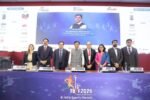
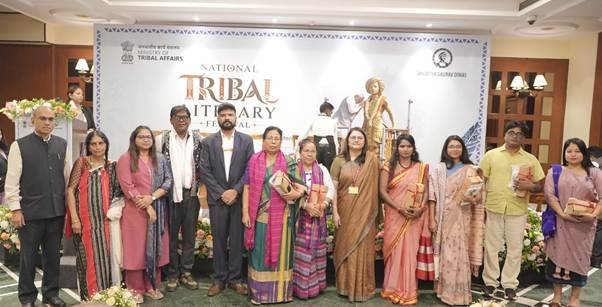
A two-day gathering of indigenous authors, linguists, and researchers concluded on November 13 at New Delhi’s India Habitat Centre, focusing on archiving India’s oral storytelling traditions and integrating contemporary tribal writing into mainstream publishing.
Hosted by the Ministry of Tribal Affairs under the theme ‘From Oral Tradition to Contemporary Tribal Literature’ as part of Janjatiya Gaurav Diwas, the event featured sessions across 27 languages, 23 of which were tribal tongues.
Archiving Oral Epics and Multilingual Education
The closing day began with a panel moderated by Prakash Jha, featuring Bhagwandas Patel, Upendra Anu, and Mayanglambam Sadanand Singh. Panelists examined regional oral histories—including the Gond Ramayana, Bhil Mahabharata, Manipur’s Wari Leeba storytelling format, and the Khamba-Thoibi epic—stressing the urgency of audio-visual archiving and formally recognizing community storytellers as heritage custodians.
A subsequent session on multilingual learning, led by former Sahitya Akademi Secretary Dr. K. Srinivasa Rao alongside Anil Kumar Boro, Sylvanus Lamare, and Parvati Tirkey, explored integrating indigenous folklore and mother tongues into early childhood schooling. Speakers pointed to translation, documentation, and digital tools as essential mechanisms for keeping tribal languages active in classrooms.
Contemporary Readings and Institutional Support
The afternoon shifted toward modern creative works through two dedicated reading sessions:
- Short Fiction: Chaired by Mahadev Toppo, the panel featured original stories read by Neeta Kusum Bilung, Ramesh Karthik Nayak, and Vasanth Kumar V.P.
- Poetry: Moderated by Jogamaya Chakma, the session included recitals from K. Vasamalli, Kriri Mog Chowdhury, Babu Sangda, Hirjir Ingti Katharpi, Gopi Krishna Soni, Marina Ekka, Sudha Chauhan, and Anjali Belagal.
During the valedictory address, Tribal Affairs Secretary Ranjana Chopra outlined ongoing institutional measures to connect indigenous creators with commercial markets. She noted the Ministry’s partnership with the Indian Performing Right Society (IPRS) on “Living Roots Originals” to safeguard the intellectual property of tribal performers, as well as plans for a dedicated tribal literature pavilion at the upcoming National Book Trust fair at Pragati Maidan.
Summarizing the proceedings, Dr. K. Srinivasa Rao advocated for incorporating tribal texts into university syllabi and translation projects. Deputy Secretary Ganesh Nagarajan closed the event by noting the past year’s expansion in the Ministry’s linguistic and cultural programming.
PIB