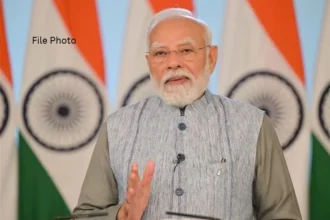

India unveiled its first domestically developed poultry vaccine targeting the H5N1 strain of Avian Influenza during an official ceremony in Bhopal on November 20, 2026. Union Minister for Agriculture and Farmers’ Welfare and Rural Development Shivraj Singh Chouhan dedicated the immunization—priced at ₹1 to ₹2 per dose—to the public while announcing plans for a ₹300-crore animal disease research laboratory in the Madhya Pradesh capital.
Developed at the Bhopal-based ICAR-National Institute of High Security Animal Diseases (NIHSAD), the inoculation targets a specific bird flu variant and is priced to remain accessible to small-scale poultry operators. Chouhan noted that although an initial proposal suggested launching the product in New Delhi, officials opted to hold the ceremony in Bhopal to directly credit the local researchers behind the project.
Outbreak History and Agricultural Economics
Since India recorded its initial avian influenza outbreak in Navapur, Maharashtra, in 2006—an event that killed 1 million chickens and forced the culling of hundreds of thousands more—the country has logged over 500 outbreaks. Subsequent waves killed roughly 900,000 birds in 2021 and 200,000 birds in 2026, alongside ongoing public health concerns regarding potential transmission to mammals and humans.
During his address, Chouhan highlighted the broader economic toll of livestock illnesses on rural households, referring to farm animals as ‘moving ATMs’ that supply steady monthly income alongside crop cultivation. According to ministerial data:
- Economic Contribution: Animal husbandry represents 14% of India’s gross domestic product, while poultry contributes an additional 1%.
- Annual Disease Losses: Major livestock infections drain roughly ₹56,000 crore annually from farmers and the national economy, led by Foot and Mouth Disease (₹22,000 crore), Lumpy Skin Disease (₹20,000 crore), Brucellosis (₹9,212 crore), and Peste des Petits Ruminants in sheep and goats (₹4,683 crore).
To curb these losses, the central government’s National Animal Disease Control Program—launched by Prime Minister Narendra Modi from Mathura—has distributed 1.4716 billion free vaccine doses against Foot and Mouth Disease. Following a 2022 Lumpy Skin Disease wave that infected 3.28 million cattle and killed 186,000 animals, researchers in Hisar and Izatnagar developed the ‘Lumpi-ProVacInd’ vaccine. NIHSAD has also previously created domestic vaccines for Gumboro disease, Brucella abortus S-19 Delta, Classical Swine Fever, and African Swine Fever.
Research Team and Political Remarks
The H5N1 research team included Dr. S. Nagarajan, Dr. Manoj Kumar, Dr. C. Tosh, Dr. H. V. Murugkar, Dr. Aniket Sanyal, Dr. Senthil Kumar D., Dr. Naveen Kumar, and Dr. Yogisharadhya R. According to the ministry, the group worked without weekend breaks for months under strict biosafety rules that mandated daily sanitization routines, the use of 120 liters of water per day for showering, and a ban on keeping household pets throughout the project.
Chouhan also used the platform to criticize opposition politicians who question India’s constitutional bodies and scientific institutions during overseas visits, pointing to the domestic COVID-19 vaccine rollout and the new H5N1 inoculation as evidence of national scientific capability.
Attendees at the event included Madhya Pradesh Minister Vishwas Sarang, Bhopal Member of Parliament Alok Sharma, Khategaon MLA Ashish Sharma, Bhopal Mayor Malti Rai, ICAR Director General Dr. M. L. Jat, NIHSAD Director Dr. Aniket Sanyal, and local municipal representatives.
pib