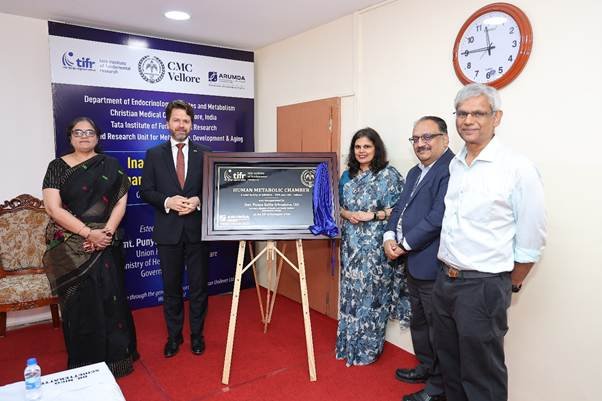
VELLORE — Union Health Secretary Punya Salila Srivastava opened India’s first dedicated Human Metabolic Chamber Facility at Christian Medical College (CMC) Vellore on November 23, 2026, advancing joint research by the Tata Institute of Fundamental Research (TIFR) and CMC Vellore into metabolism, nutrition, diabetes, and obesity.
The project aligns with Prime Minister Narendra Modi’s goal of expanding preventive care and universal health access under a Swasth and Viksit Bharat vision. Speaking at the launch, Srivastava commended TIFR, the Advanced Research Unit on Metabolism, Development & Aging (ARUMDA), and CMC Vellore while recognizing funding backing from the Department of Atomic Energy. She stressed that research must reflect India’s varied population and distinct risk patterns, as overseas studies often fail to capture local realities.
How the Chamber and Partnership Operate
Functioning as a room-sized calorimeter, the chamber tracks oxygen intake and carbon dioxide output while a participant stays, eats, and sleeps inside for at least 24 hours. Those readings allow scientists to calculate overall energy burn alongside fat and carbohydrate use during rest, daily movement, and meals. Paired with ARUMDA’s National Analytical Facility for Nutrition and Metabolism Research launched the previous year, the setup lets researchers connect cellular and biochemical data with whole-body energy use.
The partnership brings together CMC Vellore’s clinical record in endocrine, metabolic, and diabetes care—including earlier work on insulin response and energy burn among people who experienced undernutrition or low birth weight. Financial and technical backing came from several quarters:
- Funding and CSR: Support from the Department of Atomic Energy and Corporate Social Responsibility funding by Hindustan Unilever Limited.
- Advisory and Diplomatic Links: Technical guidance from NUTRIM at Maastricht University alongside network assistance from the Embassy of the Kingdom of the Netherlands in India.
Preventive Care and Dietary Drives
Srivastava pointed to broader preventive measures under Ayushman Bharat Yojana, noting that 1.87 lakh Ayushman Arogya Mandirs deliver primary care and community screening for non-communicable diseases and three cancers, covering adults over age 30. Ongoing care is supported by more than 781 district non-communicable disease clinics and 6,489 clinics at Community Health Centres, while Rashtriya Bal Swasthya Karyakram (RBSK) 2.0 aids early detection in children. She added that five additional conditions—such as chronic obstructive pulmonary disease (COPD), stroke, and chronic kidney disease (CKD)—are slated for inclusion under the national non-communicable disease programme.
To advance the Prime Minister’s push for a 10 percent cut in oil intake, Srivastava cited steps including Sugar and Oil Boards, school outreach, the ‘Aaj Se Thoda Kam’ campaign, and media messaging across radio, video, and social channels. More than 7.8 crore yoga sessions have taken place across the Mandirs to date, while ICMR-NIN is building an artificial intelligence tool to help shoppers interpret packaged food nutrition.
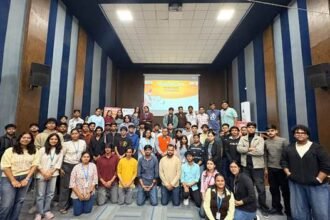
Srivastava urged TIFR, ARUMDA, and CMC Vellore to coordinate with the Health Ministry and national bodies—and noted how facilities like the chamber could link with the Pan-AIIMS Research Consortium to build stronger national health data. Attendees included CMC Vellore Director Biju George, TIFR Director Jayaram Chengalur, BRIC-Centre for DNA Fingerprinting and Diagnostics Director Ullas Kolthur, ARUMDA-TIFR’s Mahendra Sonavane, CMC Vellore’s Nihal Thomas and Felix Jebasingh, Hindustan Unilever Limited representatives, and Netherlands Embassy Health Counsellor Nico Schiettekatte.
PIB