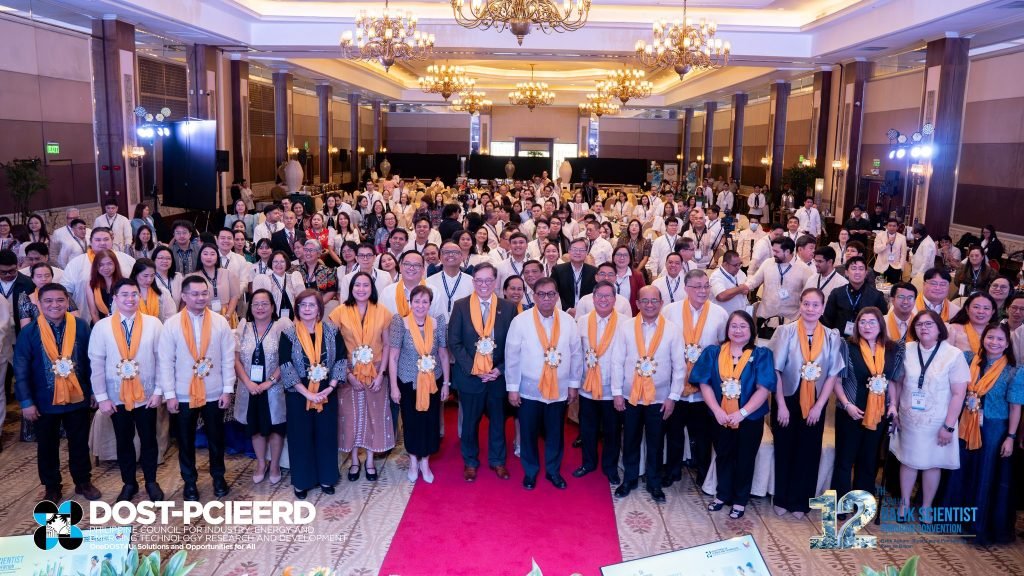
Over 25,668 Filipinos have received mentorship and training across 754 capacity-building initiatives in 2026 through returning expatriate researchers, officials announced during the 12th Balik Scientist Program (BSP) Annual Convention at The Manila Hotel on October 29, 2026. Hosted by the Department of Science and Technology (DOST) under the theme “Balik Agham: Siyensiyang Pandaigdig, Para sa Bayan,” the gathering spotlighted efforts to channel overseas scientific expertise into domestic health, agriculture, and emerging technology sectors while outlining plans to commercialize laboratory breakthroughs.
Between January and September 2026, the BSP approved 50 researcher engagements—spanning 39 short-term, five medium-term, and six long-term placements—while its secretariat linked up with 96 Philippine diplomatic and consular missions globally and hosted virtual briefings across Abu Dhabi, Belgium, Spain, Denmark, and China. Operated under DOST’s Office of the Undersecretary for Research and Development, the program is executed through three core sectoral bodies: the Philippine Council for Health Research and Development (PCHRD), the Philippine Council for Agriculture, Aquatic, and Natural Resources Research and Development (PCAARRD), and the Philippine Council for Industry, Energy, and Emerging Technology Research and Development (PCIEERD).
Turning academic research into market-ready enterprises emerged as a central priority during the convention. Balik Scientist Society of the Philippines (BSSP) President Dr. Gonzalo Serafica outlined an organizational target to launch at least five spin-off companies led by returning scientists within the next five years, with long-term ambitions to scale a major enterprise. Echoing the need for stronger research-to-market pathways, DOST Secretary Renato Solidum noted that while the Philippines placed 52nd out of 139 economies in the 2026 Global Innovation Index, sustaining upward momentum demands upgraded infrastructure, targeted funding, and institutional backing. Delivering the keynote address, Department of Foreign Affairs (DFA) Undersecretary for Policy Leo M. Herrera-Lim pledged that the DFA will continue leveraging its global consular network to forge ties with foreign universities, research institutes, and overseas Filipino communities.
Reversing “brain drain” into “brain circulation” has become a cornerstone strategy for emerging economies competing in high-value science and technology sectors. Rather than requiring permanent relocation, modern diaspora-engagement models—similar to initiatives in India, South Korea, and Taiwan—allow overseas specialists to transfer technical knowledge, mentor local researchers, and co-found startups through flexible short- and long-term fellowships. For the Philippines, pairing diplomatic outreach with venture commercialization directly addresses one of Southeast Asia’s persistent R&D bottlenecks: bridging the gap between academic publication and scalable industrial products.
Sources: Department of Science and Technology (DOST), Department of Foreign Affairs (DFA), Balik Scientist Society of the Philippines (BSSP), Philippine Information Agency